
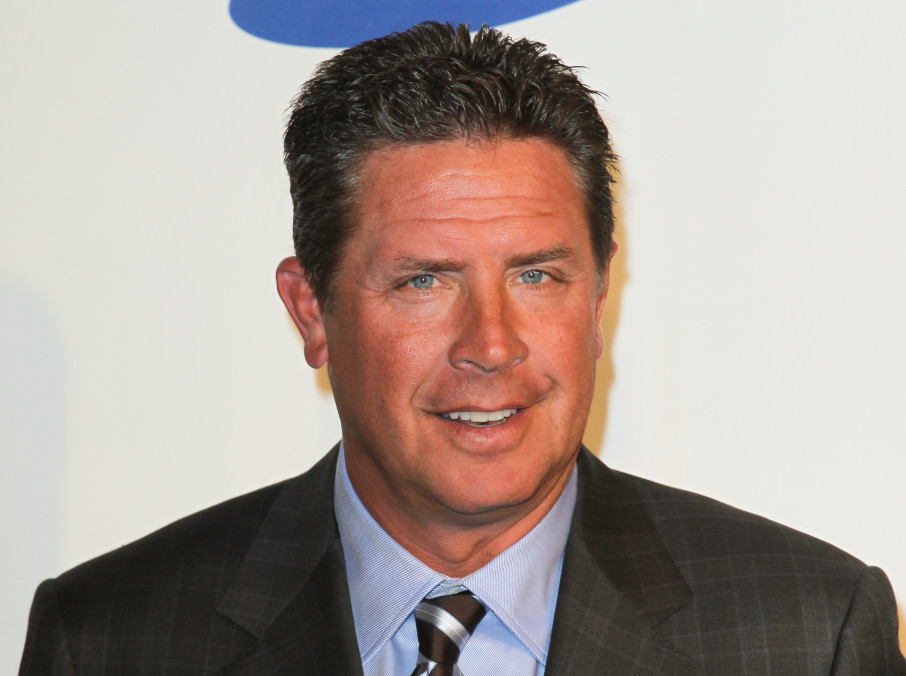
NFL legend Dan Marino, 64, has metabolic dysfunction-associated steatohepatitis (MASH), a form of liver disease, the Hall of Famer shared in a video series campaign with Novo Nordisk US, a global health care company.
Marino was diagnosed with MASH in 2007; since then, his family and friends have supported him in making healthy lifestyle changes.
MASH, the new name for non-alcoholic steatohepatitis (NASH), is a leading cause of advanced liver disease. Estimates suggest that around 5% of people in the United States have MASH, and around a third have an earlier stage, metabolic dysfunction-associated steatotic liver disease (MASLD, formerly known as non-alcoholic fatty liver disease, or NAFLD).
Over time, the buildup of fat in the liver can lead to inflammation, fibrosis (liver scarring), cirrhosis, liver cancer and the need for a liver transplant. MASH is associated with obesity, type 2 diabetes and other metabolic conditions.
Management largely depends on lifestyle changes such as weight loss and exercise.
Marino retired from the NFL in 2000 after 17 seasons exclusively with the Miami Dolphins. It was during retirement that Marino says he let his diet go. “That’s really where it kind of came about,” he told People.
Thankfully, Marino’s years of experience with routine mandatory NFL weigh-ins and physicals helped keep him on schedule with his health checkups after retirement. During one such checkup, Marino learned he had MASH, despite having no symptoms.
Symptoms are more likely to occur as MASH progresses and typically include fatigue, nausea and abdominal pain. People who progress to liver cirrhosis are prone to more serious symptoms, such as jaundice (yellowing of the skin and whites of the eyes).
“The doctors right away said that [MASH] can be reversible, it can be taken care of, but, mainly for me, they were saying, like, ‘You gotta work out. You got to lose weight,’” Marino told People.
With support from his wife, Claire, family and friends, Marino has reshaped his lifestyle.
“To control MASH, you have to find a way to get consistent and understand that if you want to live long, you have to work out, eat right [and] continue to have a positive attitude,” Marino said.
He noted that many men—especially those who play sports—don’t schedule routine health care checkups.
“You just feel that you’re invincible sometimes,” he said. “And you know what? We’re not. None of us are invincible.”
Marino hopes that sharing his story can help spread awareness of MASH and inspire others to get screened for liver disease.
“After retirement, your support is your family, people you’ve worked with, the relationships you’ve had,” Marino said. “MASH is a silent killer, and when it goes unnoticed, it could be a problem. That’s why you have to go get checked and you have to take care of your health…. It’s just so important not only for you but also for the people that love you.”
Marino told People his condition hasn’t progressed. “I get the ultrasounds and all that every year, and so far it’s been fine.” He also believes his prognosis is “gonna get better and better and better.”
In related news, on August 18, the Food and Drug Administration granted accelerated approval to Wegovy (semaglutide), in conjunction with a reduced-calorie diet and exercise, for people with MASH who have moderate to advanced liver fibrosis but have not yet developed cirrhosis. It is the second medication—and the first GLP-1 agonist—to gain approval for fatty liver disease.
The accelerated approval is supported by results from the Phase III ESSENCE trial, which showed that nearly two thirds of participants who received weekly injections of Wegovy experienced MASH resolution without worsening fibrosis, while more than a third showed fibrosis improvement without worsening MASH.
link