


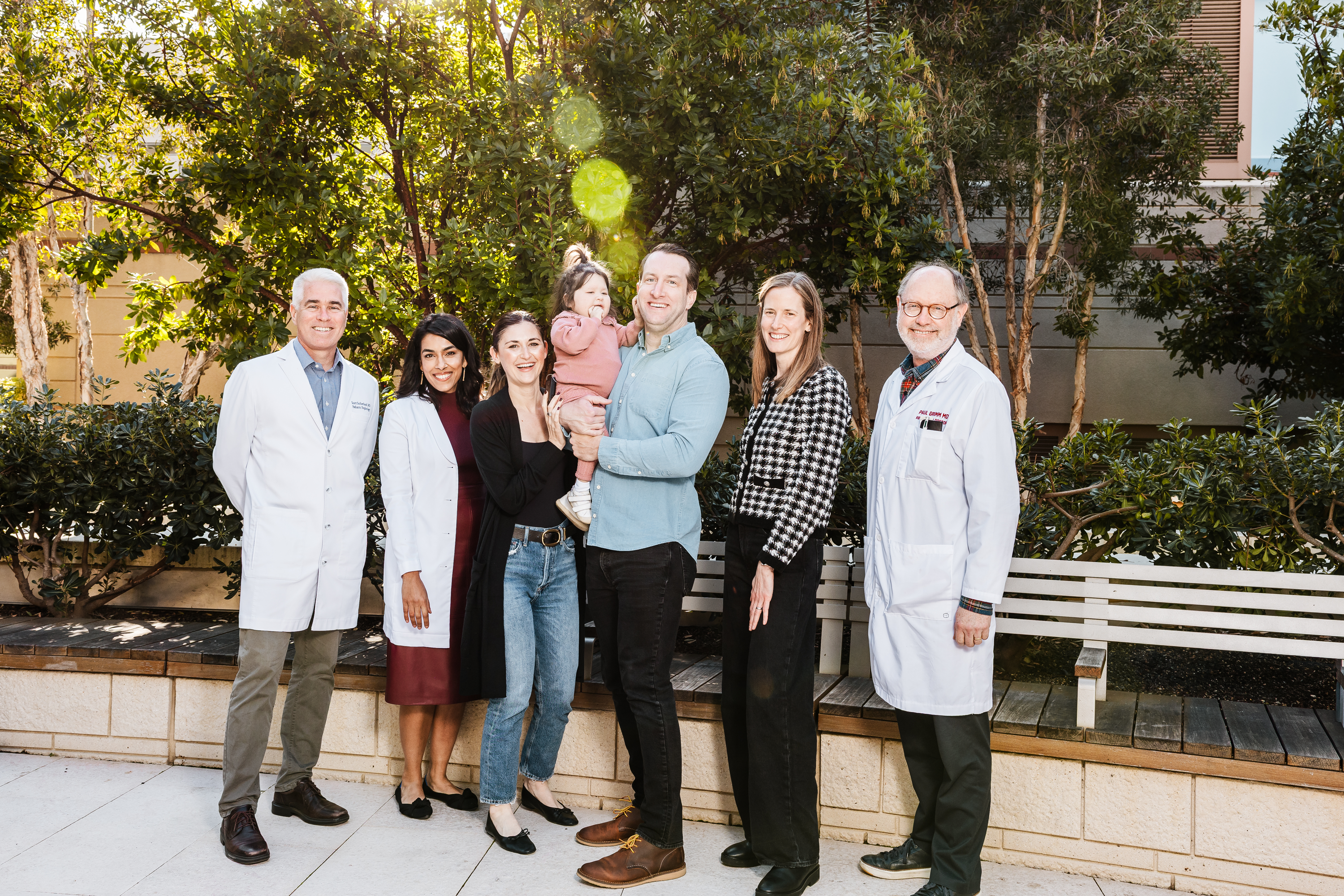
In January 2020, in Walnut Creek, California, Lyndsay Yandell gave birth to a baby girl named Audrey. By all indications, she was a typically healthy baby. A few months passed, the pandemic swept the world, and around that time, Audrey developed “this weird coughing thing,” as Lyndsay puts it. It wasn’t COVID; Lyndsay and her husband, John, were being extra cautious and quarantining. But Audrey’s doctor didn’t seem to have any answers, and the coughing persisted, so Lyndsay took Audrey to urgent care.
“Her oxygen levels were really low,” Lyndsay says, “and they said, ‘Oh, you need to be admitted right away, very, very quickly.’” Audrey was taken to a hospital and she declined rapidly. “It was insane,” Lyndsay says. “She couldn’t breathe.”
It turned out Audrey had a rare but treatable pneumonia known as pneumocystis jiroveci pneumonia, or PJP. Soon, she was feeling better. But then, every six weeks, Audrey would fall ill, seemingly out of nowhere. “We’d be in the hospital, they’d throw a bunch of steroids at her, and she’d get better,” Lyndsay says.
By then, Lyndsay had taken Audrey to Lucile Packard Children’s Hospital Stanford, one of the leading pediatric hospitals in the world and the center of the Stanford Medicine Children’s Health network. Doctors there were running lots of tests, trying to get to the root of the problem. Around Audrey’s first birthday, they determined that she had hemophagocytic lymphohistiocytosis, otherwise known as HLH, a rare condition in which the immune system becomes overactive. Essentially, the body begins attacking itself.

HLH is hard to diagnose, and Audrey’s case was particularly tough to pinpoint. There are two types of HLH: one caused by genetic mutations, one caused when an underlying medical condition affects the immune system. Typically when newborns show signs of HLH, it means they have the type caused by genetic mutations. Doctors ran advanced clinical testing on Audrey and couldn’t find the cause. The Genetics team at Stanford Children’s put Audrey through the National Institutes of Health Undiagnosed Disease Network study at Stanford Medicine, which found that her HLH might have been caused by two very rare genetic mutations.
If that weren’t enough, Audrey had an aggressive form of HLH, too. “It was scary,” Lyndsay says. “You almost can’t comprehend what that means.”
link